Farm Building Roofs in Northumberland, Cumbria and the Dales: Flashings and Fixings Checklist
Flashings & FabricationsShare
Farm buildings across Northumberland, Cumbria, County Durham and the Yorkshire Dales get the worst of Northern weather. They're often on exposed ground, open on one side and decades old. When the sheets come off, the flashings and fixings usually need replacing too.
This checklist is for farmers, agricultural contractors and builders re-sheeting or repairing barns, general-purpose sheds, lean-tos and livestock buildings.
Measure before you order
- Ridge length. Measure end to end, plus any overhang at the gables.
- Verge lengths. Measure along the slope on each gable, eaves to ridge, on both sides.
- Wall abutments. Measure any length where a roof meets a wall, such as a lean-to against an old stone barn.
- Door heads. Measure the width over sliding or roller doors where water needs to be kicked clear.
- Pitch. Note it, or simply photograph the gable with a tape across it.
- Structure. Note whether the purlins are timber or steel, and the sheet profile: 32/1000 box profile or corrugated.
Our flashings come in 3m lengths. Allow for laps of around 150mm where lengths join. For example, a 6m run needs three lengths, not two.
Flashings
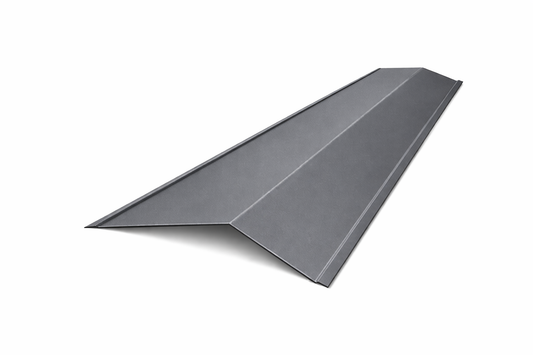
- 130° ridge flashings for the apex. Each is folded to 130° with around 10–15° of flex, so they suit most agricultural pitches.
- 90° corner barge flashings for the verges. They close the sheet ends against wind and birds.
- 90° upstand / abutment flashings where a lean-to meets a wall. Old stone walls are rarely straight. Seal the upstand leg well, and on very uneven stonework consider a bespoke cover detail.
- Drip tray flashings over door openings, to stop water running back into the door head.
Old barns often have pitches and junctions that standard angles don't fit. We fold bespoke flashings to your measurements or a photo with dimensions. That's usually quicker than forcing a stock piece to fit.
Fixings
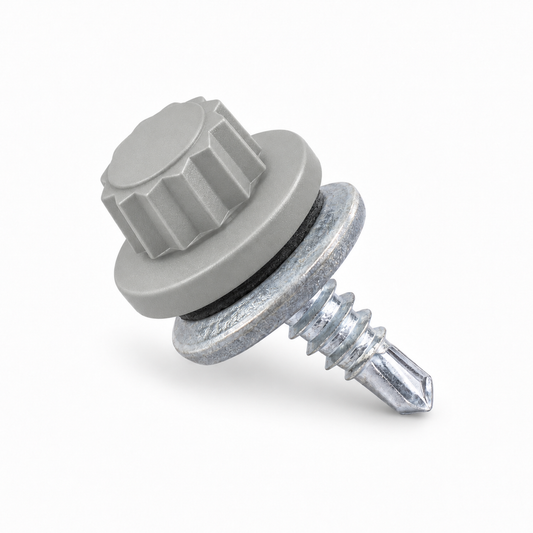
- Timber purlins, box profile. Use timber roofing screws with 19mm washers, lengths 32mm to 175mm.
- Timber purlins, corrugated. Use 65mm or 130mm BAZ washer screws for crown fixing.
- Steel portal frames. Use light steel or heavy steel screws, depending on the section.
- Side laps and flashings. Use 22mm stitching screws.
Not sure which applies? Our roofing screw guide goes through it step by step.
Birds, fillers and the nesting season
32/1000 foam fillers at the eaves and ridge keep out birds, wind-driven rain and draughts. On a farm building, that's the difference between a dry shed and a roost. One thing to plan around: under the Wildlife and Countryside Act 1981 it's an offence to damage or destroy an active wild bird nest. If swallows or other birds are nesting in the roof, do the work outside the nesting season, which runs roughly March to August, or wait until the nests are no longer in use.
Livestock buildings
Ammonia from livestock is hard on coatings, especially on the underside of the sheets. If the building houses animals, ask your sheet supplier whether the coating is suitable for that use before you buy. It can affect the guarantee.
Colours and planning
Greens and greys suit most rural settings. Our flashings, colour caps and moulded head screws all come in Juniper Green, Moreland Green, Goose Wing Grey, Merlin Grey and five other shades. In Northumberland National Park, the Lake District and the Yorkshire Dales, planning conditions can control building colours. If you're changing the colour of a building, check with the park authority first. See our colour guide for help matching.
Getting it to the farm
We deliver UK mainland from our Newcastle unit, and delivery is free on orders over £1,000 excluding VAT. A full barn re-sheet often clears that. For farms within 30 miles of Throckley, local delivery rates apply. See our delivery page. Send us your measurements and we'll put the list together. Call 01912 853848 or contact us.